Monday, April 16, 2012

Hi - I'm new here.........

The joys of being a newbie………

It’s interesting to compare the traffic of my two music blogs – Catchagroove, the anything-but-classical one, has had a surprising number of “hits”. This one, however, is certainly the classical annex. Kinda how years ago, in Manhattan and Paramus, the main Tower Records stores would have a Classical Annex next door – a whole different building dedicated to nothing but classical music. Sad to say that back in the day -  I never ventured into the classical side of Tower Records. But even from a distance it seemed kinda – quiet! So it is with this blog. Not as much traffic. But, as it happens, this works as a bit of a writing experiment for me, as well as a musical discovery experiment.
For the past few years I’ve done a lot of listening, collecting, thinking, reading and theorizing. Sometimes I get down about how little I know and whether or not I ought to bother keeping up a blog about something I know so little about.  I grew up on popular music. These days I can be pretty intuitive when it comes to rock, blues and jazz. The first time I heard Tom Waits was on the radio – I think it was “Step Right Up”. I had, prior to hearing his music, only READ about Tom Waits – descriptions of what his music was like. When I heard that song on the radio, even before they announced who it was – I knew what I was hearing was Tom Waits, based entirely on what I read about him. Yet – as of right now, I might struggle to tell the difference between a Mozart or Schubert symphony. I’m just not that savvy yet. Eras I’m better at. Individual composers……….eh, I’m workin’ on it!

Yet, what I lack in sophisticated and scholarly appreciation I try to make up for with unbridled enthusiasm. I’m just eating this stuff UP. Just tonight I listened to no less than three full Mozart symphonies – 25, 40 and 41. Considering the brevity of these pieces, well – compared to a typical Mahler or Bruckner symphony, Mozart’s are brief indeed – it’s like eating POTATO CHIPS. So there you have it – I have compared Amadeus to junk food. I may be lowbrow, but darnit – I’m SINCERE! Of course this kind of enthusiasm is open to ridicule, especially from those who would be able to tag those Mozart pieces as nothing but “warhorses”. Yet, for me, they aren’t warhorses at all. In fact – part of the excitement is due to the fact that this is NEW STUFF for me.

And therein lies the justification for my blathering on here. Quite frankly I would LOVE to read the reflections of someone hearing “Sgt. Pepper’s Lonely Heart’s Club Band” for the first time in middle age. In fact, it’s a bit of a sad reality for me knowing that I will never be able to hear that great record afresh – I heard it so long ago and so frequently that the whole thing is etched into my consciousness (even the mono mix, though I didn’t discover that until I was in college – exciting experience indeed!!). Yet, there is a whole world of so-called classical music that, while certain pieces may be overplayed to some, aren’t overplayed to me. It’s that excitement of musical discovery that leads me on from composer to composer, from piece to piece, from orchestra to orchestra and so on…………………..

In fact, the variety of variables involved in the listening experience of “classical” is enough to keep a listener busy for a lifetime – even with individual pieces: conductors, orchestras, recording techniques. Like how Bernstein recorded two different versions of Tchaikovsky’s 4th – one in the late 50, one in the mid-70s. What on earth for? Well, when you can get both for $1 apiece it creates an interesting evening’s worth of sonic debate. And if I manage to discover some arcane reason for recording the same piece twice in one lifetime I get excited. Matter of fact, I spent a number of hours this past weekend playing Glen Gould’s two recordings of the “Goldberg Variations” – the 1955 and 1981 ones – back and forth ……… back and forth. And you know what? The 1981 version was basically slower. Ah, but it was more than that. Although it was technically the same notes on the page – apart from the recognizable melody lines – the two renditions really did sound like two different beasts altogether.
Glenn Gould 1955

Glenn Gould 1981
So, it’s great being a newbie. Most everything sounds pretty fresh to me, even if I have heard some melodies before. More often than not, recognizable melodies were taken out of their original context so hearing them in their proper, original form is a blast! Ah, I’d better watch out or I’ll start sounding like this guy:

Personally, I’m closer to this guy:


But I dig “classical” music just the same as good rock and roll. Maybe if I keep writing here I might discover why. Or at least make attempts at understanding the intangible appeal. Next time, I’ll get more into what I think I DO know, if I know anything at all. Until then – happy listening!

Wednesday, March 28, 2012

Tchaikovsky Symphony No. 4

Okay, so this is Tchaikovsky. Long before I got the bug to dig deeper into this genre I knew enough about Tchaikovsky from the "Nutcracker Suite" - a holiday classic perhaps, but not anything I felt a great affinity for. That kind of material has little appeal for me. Or NO APPEAL, actually. So when I started off on my "serious music" journey, Tchaikovsky was not on the intended radar at all. For the longest time I just skipped over anything by him other than the 1812 Overture (and gads! I wound up with a boatload of those somehow). Then I got suckered into grabbing this record because the cover reminded me a lot of the Fleetwood Mac THEN PLAY ON cover! Right?
Plus, the record label was a really interesting variation on the classic Capitol rainbow design with this wicked-looking EMI symbol on it:
Aww, man - how could I say no to this? Plus the inner sleeve (not pictured - too lazy) was a custom job with a neat history of the EMI company on it. At the same Salvation Army there was a Tchaikovsky 5th too so I grabbed both (don't get me started on the 5th Symphony, I wound up with a slew of those overnight too - dang!). When I first played this piece I was pretty baffled by the first movement - the rest made sense, but it struck me as a real mystery. Eventually I made it to the 5th Symphony and was convinced I liked that better. Then, inexplicably, I kept picking up different versions of the 5th without realizing how many I already had - it was weird, man! One day I just poked into the Tchaikovsky section and I was like, DANG - WTF!?!? Anyway, for the longest time I thought the 5th was IT, right?

Alright - I think I kinda got the handle on the fact that Tchaikovsky's main deal is really in his symphonies. And, for that matter, the main event of those are the 4th, 5th and 6th. There's an unfinished, sorta 7th, but that's a controversy I haven't dug into yet. But those main three are THE DEAL for this guy. One through three.......I think I have a First Symphony somewhere.....it's alright, but kinda "surface" y'know? Most people ain't into those. So I got a buncha 4ths, 5ths and 6ths now. So much for putting Tchaikovsky on the back-burner, eh?

Recently I watched that Otto Klemperer film and vowed to pick up anything he did in reasonable shape just because he's awesome. And that led me to another 4th:
This was an early 60s recording, but the label betrays a late-60s pressing..........

Actually not bad - especially for Capitol / Angel pressings. It can be a real hit and miss affair with these beasts. Just some surface noise, but overall QUITE enjoyable. And, I felt like I understood and dug the 4th for the first time with this record. Plus, I noticed a funny thing............
PINK FLOYD! Yeah - all you classic rock fans know how the song "Wish You Were Here" starts on the Pink Floyd album right? The radio stations are being changed from one station to another and there's a very brief burst of an orchestral piece right before the iconic descending guitar line of the song "Wish You Were Here". Okay, find a copy of Tchaikovsky's 4th Symphony and cue up the 4th movement right at the beginning. Well whadda ya know! Heh heh heh!

I liked the Otto Klemperer version quite a lot, but then I found this one:
Charles Munch and the Boston Symphony Orchestra. Obviously a 70s reissue from RCA - nice job on the new cover art (no idea what the original looks like)! Even the dynaflex vinyl sounds decent enough...
But I'll tell you....... there's something MAGICAL about this record / version. I don't know what it is...maybe the sound of the orchestra in Boston Symphony Hall, maybe the pacing of the music but Munch just NAILS this one in my opinion. I've played it quite a few times over the last few months and it's a keeper for sure. Just to make sure I pulled out this Leonard Bernstein / New York Philharmonic version tonight and did a shoot-out with the Munch performance...........
I have a mono copy of this, but I know a stereo exists and has been reissued since the early 60s when this was done. Now, don't get me wrong - I'm a big fan of Lenny Bernstein. He did the planet a lot of good with the work he took on which was not limited to the "stuffed shirt" set at all! Lenny was one HIP dude. He recognized Brian Wilson's genius as a composer and that's just scratching the surface. So, you gotta dig Lenny. But........his Tchaikovsky 4th is a little tentative and, well - just not flowing like Munch's version. I dunno - there just seemed to be all these weird dramatic pauses. It's amazing to me how different interpretations of a written score can yield such dramatically unique results. Gotta love those six-eye, grey label Columbia Masterworks labels though..........
Just for laughs, I pulled out this Karajan version.........
Now, Von Karajan has a bit of a rep for being a kind of "cold fish" conductor and I figure this can't be good for a Russian composer, but really - even in spite of the compromised and yucky early 60s Capitol Angel pressing, this is not a bad listen at all. Normally I get pretty defensive when I see this label color and design:
There's been many a time when these pressings have let me down, but being the fool that I am I still take the odd chance here and there. I lucked out with this one. Acceptable sonics, all things considered. And, oddly, a somewhat more engaging interpretation than the Bernstein.

I didn't make it back to the Beecham version tonight. That's okay. Maybe tomorrow night - that's the nice thing about being vinyl-ready......lots of opportunity to compare different recordings cheaply. Plus, its a great way to learn more about individual works to hear different performances and perspectives. But for now.....my vote goes to the Charles Munch / Boston Symphony disc. Munch does a beautiful job at highlighting the many wonderful themes of this great Symphony. Check it out!

Tuesday, March 13, 2012

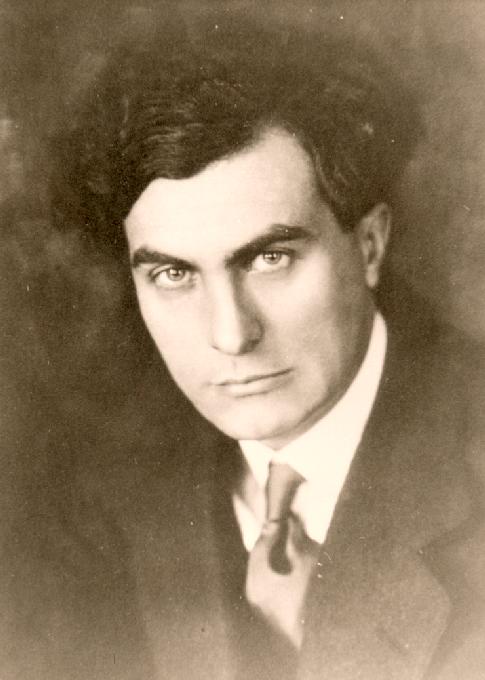
Edgard Varèse

 As usual, I can’t really add anything more about this great composer that hasn’t already been written. For that matter, I know precious little about his life. One wonders (not having read any biographies about him) if his personality matched how severe he looked! He was one scary-looking dude! I know he was part of the avant-garde school of music from his native country of France. He moved to the United States in the early part of the 20th Century – specifically to Greenwich Village, New York (where else, right?). More specifically to 188 Sullivan Street.
To think of all the times I was right nearby shopping at Second Coming Records and I never knew! His wife Louise lived there until her passing in 1987. Edgard Varèse himself left the planet in 1965. But, as he himself put it, “The present-day composer refuses to die!”

My exposure to Edgard Varèse was a direct result of having read that very quote on the sleeve of early Mothers of Invention albums. Once I heard Edgard Varèse’s music it was very clear where Zappa got his inspiration (at least a good chunk of it). My good friend Mike and I tracked down the Columbia double-LP set of the Robert Craft recordings reissued in the early 70s – it looks like this:
Far out stuff! Especially coming off those vinyl platters with the “serious”, grey Columbia Masterworks labels. Technically, Mike bought the LP and I made a cassette copy (which I still have). Though I’ve picked up many other recordings of Edgard Varèse’s music, the renditions on that double LP remain favorites. Here are some other records……………..
This is the famous EMS 401 LP from 1950. I got it as part of a freecycle haul years ago and while it’s not in the best of shape it’s still pretty cool. It is a pretty rough and tumble sounding recording though. I think this was the first commercially available sound recording of Varèse. In the late 50s, the Robert Craft renditions came out, the first one with a cover like this:
I found the mono version of this record for $1 at a Goodwill last year. Okay, not exactly free, but still awesome.


After Mike and I scored the double LP, I located this record in the stacks at the local library. Years later I got my own copy in mono. Really powerful version of Arcana right there!

This album featuring Ameriques came out around the same time as the Arcana record. Funny how the cover art is so similar! Coincidence? Heh!
Here’s a Quadraphonic record of some Varèse pieces. As it happens, I do have the equipment to decode the quad information accurately. Haven’t done that yet, but had to have the record for when the urge hits. And that’s an important admission. Edgard Varèse isn’t “anytime” listening. Have to be in the right frame of mind, but when that urge hits, there’s nothing else like it!

Two years ago, there was a two-night mini-festival of Edgard Varèse at Lincoln Center. Since I won the World Cup pool that year (go SPAIN!) I got tickets for me and Mike and we ended up at the second night when the larger orchestral pieces were performed. ONE HUNDRED THOUSAND PERCENT UTTERLY FLIPPING BRILLIANT is what it was to hear this music played with precision, ferocity, virtuosity and VELOCITY that night. If they did that every year, I would go every year. Hope I get to hear some live performances of Varèse at least once more before I split the planet myself.

No matter what some folks think about Frank Zappa, he did the “serious music world” a real SOLID one through his constant advocacy of the music of Stravinsky, Webern, Nancarrow, Varèse and other favorite modern composers. It’s a little known fact that Zappa’s last recording project featured his favorite Varèse compositions performed by the Ensemble Modern under his own direction. The project, which included a film, was even titled “The Rage and the Fury” and it’s DONE, just waiting to be released. As of last summer, Gail Zappa typically, cryptically announced plans to release this project as she put it “by the end of the Mayan calendar”. Isn’t that in 2012? Well, if true – I’m psyched!

Oddly enough, as prolific as Zappa was in his lifetime, his hero was the exact opposite. So, you can get all the Varèse compositions on one two-disc CD set these days. One I’ve heard that is pretty good is this one:


 So, I named my blog after a Varèse composition. It’s only fitting that I post a clip of it here:

I have other posts about Edgard Varèse planned for the future. His influence continues to be felt in modern music and not just through the Frank Zappa connection, though certainly Zappa's enthusiasm has helped to keep interest in Varèse's music alive. As folks continue to debate the nature of music it would be helpful to recall the other Edgard Varèse quote : "Music is organized sound!" Happy listening!

Wednesday, February 29, 2012

Short-Attention-Span Theater and the value of Album Covers, Part One........

When it comes to classical music, serious music, non-commercial, non-vocal music – I have to readily admit I am not academic about my appreciation. My grasp of concepts like “sonata form” are tenuous at best. I have a little basic training in rhythm, melody, counterpoint, keys, modes, historical background and the like. But I am an outsider in nearly every sense of the word when it comes to the “serious music” scene. I do like to be exposed to different musical ideas, however. I try to find basic appreciation of music even though the deeper significance of any given work is likely to bypass my consciousness quite easily.

So what am I in it for? Specifically – I found myself wanting to hear more instrumental music in general, yet I also wanted to branch out from jazz and other more popular forms.  Really – I knew there was a whole tradition of European music to which I had very little exposure – a reality I wanted to change. So – finding pieces I like and returning to them frequently has been the key. This is where LP records are helpful. Sometimes it’s just a matter of knowing what records I like based on the sleeve art! I’ve got that orange cover Bach cello album…………


the album with the impressionistic river on it (Moldau)……

the Varese album that looks like a psychedelic flushing toilet………..

and this one:
Beethoven – Sonata for Violin and Piano / No. 6 & 9 – Arthur Grumiaux (v) and Clara Haskil (p)     I got this record in a batch of about 10 LPs from an ebay auction last year. All old Beethoven records – all in mint shape for $10 shipped! Not bad. Especially since I eventually discovered I really enjoyed both performers. I have a few other records with Grumiaux – he’s another violinist I’ve picked up on. Great intonation – great tone generally. Tasteful approach. Of course neither Grumiaux nor Haskil are alive today. She died at the height of their collaboration as a result of injuries suffered on the way to a performance, of all things. This record is one example of the telepathic rapport these two had. I’m only just getting familiar with Beethoven works outside of the Symphonies and this record is an example of the value of LPs in this process. I might not always think to myself – “ah! How about those Violin and Piano Sonatas”. But I will remember the cover and think – “yeah! Time for that Grumiaux / Haskil record!”

LP records offer up bite-sized portions of this music. Easily digestible. Album covers, however bizarre, offer a reasonable visual connection to the contents – not usually detrimental to the enjoyment of the music within. Most companies tried to accommodate a certain level of taste in their choice of visuals. Sometimes record executives are misguided – such as in the case of the Westminster Gold reissues of the 70’s like this:

or this..........


Just like everything else, there’s a website dedicated to these wacky covers here:

http://www.westminstergold.com/


I don’t own too many of these, but the ones I have are actually quite good from a musical standpoint. It really must have been a puzzlement for record company suits to figure out how to market this music. Did they succeed? I can’t imagine many die-hard music fans were won over by scary sleeve-art. I think there were even some lawsuits in the case of living composers who took exception to the use of goofy images on record sleeves containing their music!

I have more examples for future times - this is part of the fun of exploring the world of physical music products of the 20th Century! It was the golden age of recording for all styles of music. The demand for platters encouraged the outpouring of talent and the growth of the music industry such as it was then. As many folks are discovering for themselves now, those vibrations are still good - and often available on LP for a minimal investment indeed! Happy hunting and listening!

Saturday, February 11, 2012

Shostakovich 5th Symphony


Wow! I just watched this powerful film about Shostakovich and his 5th Symphony. This is a must-see! Check it out:

The film is in six parts on u-toob - the first of which is in the window above. To see the whole film in one place, you can check out the PBS website and view the film at this address:
http://video.pbs.org/video/1295305133/#

I literally had no idea this series existed until I stumbled upon it tonight. Will be checking out the other episodes! Enjoy!!

Tuesday, February 7, 2012

Julian Bream and Classical Guitar

         Here's my latest Juilan Bream score. Just happens to be a duet record with John Williams. I really enjoy the classical guitar records both of these guys have put out - I have a handful from each so far. Normally John Williams records are on the Columbia label and Juilian Bream's are on RCA. Man, that sleeve sure screams 1972 doesn't it? The music within is a great collection of baroque and classical pieces - most of which I'm not familiar with. The exception being "Pavane for a Dead Princess" by Ravel.

        The first time I heard that Ravel composition was watching Larry Coryell perform it live - quite a captivating performance! I've been a fan of that piece ever since. The version on the record above is pretty awesome, but in my mind that will always be Larry Coryell's thing. In general, I really enjoy acoustic guitar music. It's only in the past few years I've managed to find some classical guitar records and I have yet to be disappointed. Just awesome stuff! There are plenty of John Williams and Julian Bream records floating around out there at Goodwill shops and the like. I especially like Julian Bream's releases on RCA. Even the floppy dynaflex jobs sound pretty good to me. Here's a few other records I like of his:
        Just great stuff! I could listen all day long to classical guitar music. I have a few other Julian Bream albums I rescued from Goodwill bins I'll have to get around to posting one of these days. No matter how garish the cover - for $1 you just can't go wrong. Bright Moments!

Thursday, January 19, 2012

Otto Klemperer

Alright – I’m gonna save you $100. That’s right. Click on the youtube link below, watch a great documentary about conductor Otto Klemperer and you won’t have to pay $100 to buy the only VHS copy listed at amazon. Must be out of print. No DVD to speak of either and I wouldn’t hold my breath for a release. This thing is about as low budget and funky as it gets, but I found myself laughing out loud many times at the dry, craggy humor of this GIANT of a 20th Century conductor. And considering he topped out at a lofty 6’5” that’s no lie – he was a large boy indeed! Literally – a TOWERING figure of music.

There are so many reasons to like Otto Klemperer. He knew his Beethoven by heart. He was an early champion of Mahler (and knew him as well). He showed distaste for the rise of the Nazi party in Germany after WWI – managed to survive and escape to the USA where he conducted the Los Angeles Philharmonic for several years before eventually returning to Germany after WWII to give Richard Strauss what for about being politically amoral. Go get ‘em Klemp! In fact, it’s amazing to watch in the film how he navigates through several political situations while remaining true to his ideals and morals. In other words – he moved around a LOT. But consider this – how many people can claim to have enjoyed dual citizenship status of both West Germany AND Israel – simultaneously – in their lives? That’s my man Otto for you.

As if escaping from the Nazis wasn’t enough – life was to deal Klemperer a number of crazy blows. While living in exile in the US, he was diagnosed with a brain tumor – though he survived surgery his recovery was protracted and left him with partial paralysis on his right side (even effecting his facial muscles). In 1951, he suffered a fall and broke his hip. In the early 60s he survived accidentally setting fire to himself (and absent-mindedly trying to put the fire out with a bottle of alcohol sitting on his night-table next to his bed – he admits to doing this in the documentary!!). I don’t think he was ever run over by a sixteen-wheeler truck, but hell – seems like that’s the ONLY thing that didn’t happen to him. The fact that he lived to be 88 years old and worked right up to a year prior to his death is a testament to the triumph of the human spirit – or just crazy luck. Stubborn German, as my mother might put it.

I have to admit, I have only a few of his works – a Bruckner 7th, some Beethoven……but after watching this (admittedly low-budget, but ultimately awesome) documentary I want to grab all the Klemperer I can get my hands on. I really think if you could go back in time and put Otto Klemperer and Sonny Boy Williamson in the same room with a deck of cards you’d have yourself a HELL of a time right there! With the right amount of spiritual lubricants they’d end up either in fisticuffs or laughing and back-slapping each other (or BOTH). I should be so lucky to live to be an 88 year old  badass MOFO like Klemp. They’re not making them like this anymore, folks. It’s mindblowing to see the footage at about 1:20:00 where he’s conducting in a recording session at Abbey Road Studios at around 1970 or so. He looks DISGUSTED with all those interruptions over the recording process – heck! He ain’t PINK FLOYD, y’know!

Watching the documentary, I couldn’t help wondering if Peter Sellers used Klemperer as a model for his Dr. Strangelove character – the resemblance is pretty striking! The film is pretty funky and requires a lot of sub-title reading, but the anecdotes are worth the effort, even if the soundtrack is a little wobbly. I guess what I like most about Otto Klemperer is his refusal to concede to oppressive dictators, his determination and sheer intensity of being. Listening to that Bruckner 7th yet again – there’s a real weight to the performance that must be attributed to Klemperer’s influence.

Here’s a link to the official New York Times obituary – good synopsis of his life and legacy:
http://www.nytimes.com/learning/general/onthisday/bday/0514.html

And here’s that documentary. It’s pretty hard-core stuff, but there are some wonderfully entertaining stories and anecdotes.