Friday, June 14, 2013

Box Set Mania, Schubert Symphonies and late night Debussy

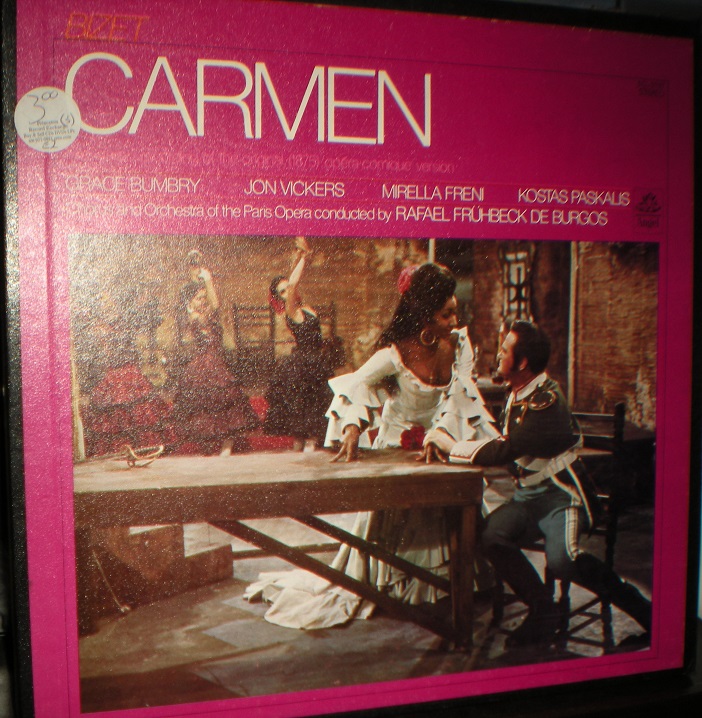
A bunch of entries ago I did a spotlight feature on budget album releases worth checking out. The above LP was among those I pictured then and I'm listening to it again right now, actually. Since m'lady was gifted with a new camera for the holidays I've taken the liberty to borrow it now and then to improve upon the visuals I use here. I have to say, the new Canon camera wipes the floor with the old Nikon "coolpix" I'd been using up til now. Getting nice photos is practically effortless compared to before - niiiice!

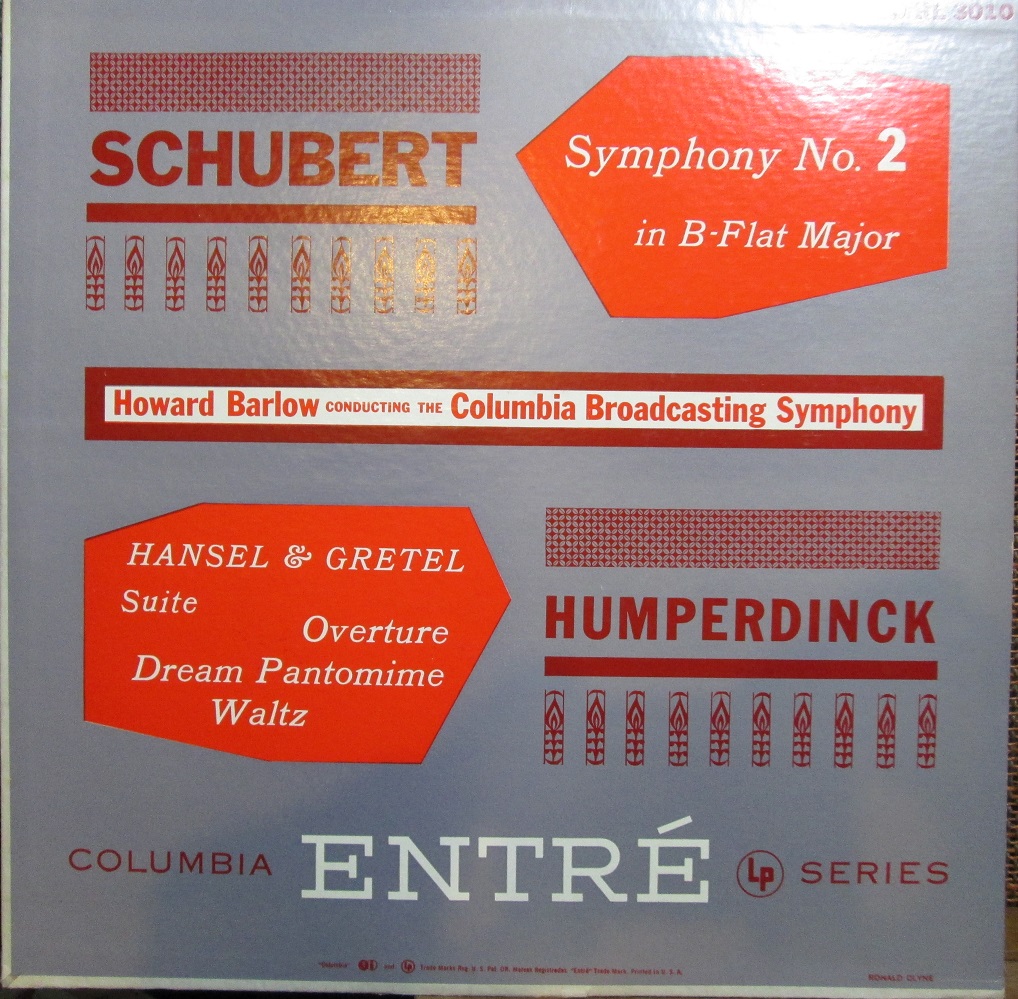
Anyway, the above mono LP comes from the Entre budget line Columbia had going and it's a good sounding platter with a pleasant performance of Schubert's 2nd. Here's the label:
It almost looks like a white-label promo or something, but this I reckon is the stock label design. Smooth and punchy mono. Somewhat obscure conductor Howard Barlow does a fine job of leading the Columbia Broadcasting Symphony through this enjoyable performance. The record has a little surface schmutz but the grooves are clean and no real scratches to speak of. Not bad for the $1 I paid for it. Funny to notice the price sticker on the back sleeve:
The little white tag to the left shows this listing at $1.98 new. Let's just figure that the vintage of this record is probably from about 1955 or thereabouts. If we use the CPI Inflation Calculator it's amazing to see what the equivalent in today's money would be for this:

Well now! Interesting to also consider what I paid for a used 4CD box set of all the Schubert Symphonies a few weeks ago - $1.99.
Nice collection - great performances. What would this $1.99 investment have cost me in 1955 money? About 25 cents! The conclusion? Classical fans have never had it so good! Even in this crazy modern "free download" mentality culture we live in. Building a library of quality classical music has never been so cost effective. And these days, 4CD box sets are nothing. I recently took delivery of these two fine box sets:

 The Klemperer box is mostly live recordings yet still pretty enjoyable. Plus it contains an entire Beethoven Symphony cycle along with key Bruckner pieces. The Jochum box likewise has a complete Beethoven cycle as well as complete Brahms and Bruckner symphonies as well. Dang that's a lot of listening! I'm pretty sure the Klemperer set came from Presto Classical online. Even though it was shipped from England, I still got a great deal - about $20 shipped. Speaking of Presto, they're running a Klemperer special for the next few weeks. I'd love to bag a few of these before they go off sale - see here:
GOOD KLMEPERER DEAL FROM PRESTO CLASSICAL

It sure has been an exhausting past ten months for me in my professional career. Stress levels have been at all-time highs. Calming music has become a valuable component for survival lately. One of the most-played slabs-o-wax that never fails to ease me into a better and more relaxed frame of mind before heading off to snoozeville this year has been side two of this album:
Side two features the Debussy piece "Danses" and the Erik Satie classic "Gymnopedies". The Orchestre de la Radio Suisse Italienne led by Roland Douatte may not be the most well-known, tier one orchestra. Yet they sure deliver the goods on this record. I was initially attracted by the unusual (for me) Debussy works featured on this album. But what a performance! Side one is kinda upbeat and bright which is okay for what it is. The real value of this record is ALL ABOUT SIDE TWO, though.

Of course this was a thrift store rescue album. Couldn't find a copy off ebay recently either. The disc was certainly pressed in France and may not have ever seen a domestic (US) release. See here:
Cool label art. I have reason to believe this is a mid-60s pressing mainly because of what popped out of the sleeve - three copies of this postcard:
Here's the address on the back of the postcard:
1967, eh? Fairly modern looking building. Wonder if it's still there. And what the connection between the postcards and the LP is. Not that I care that much. What's really important is this: if you need some extra-mellow musical chillout vibes to calm your shattered nerves, THIS RECORD IS FOR YOU!

Happy hunting / listening / etc............


Friday, May 10, 2013

Beethoven / Stockhausen........Analog / Digital.........It's all MUSIC

Well, it sure has been awhile since my last post here. I've been listening more than writing though I have to admit I still haven't tackled that Wagner Ring Cycle (maybe over the summer?). My insatiable appetite for classical platters has only slightly diminished, at least for common core stuff. How many versions of Beethoven's 9th Symphony are you willing to keep on the record shelf? Sometimes it's just better to leave those platters in the bins for other folks to plunder. Yet, every so often I'll spot a few noteworthy records of interest which can lead to interesting surprises.

Tonight I found myself reaching for the mono LPs again. I've been doing this for the past week or so. Some weeks it's stereo albums - some nights it's all CDs. But lately mono LPs have been in heavy rotation.
Even though I have other versions of this famous Beethoven trio piece, I had to pick this album up since it was in very nice shape (A) and it features Antonio Janigro on cello (B). I have a favorite Janigro record of solo cello Bach suites (the one with the orange cover) so of course any Janigro records are fair game.
And here's that nice red Westminster label. This company put out really excellent quality pressings for their time. Westminster was definitely in competition with the Mercury Living Presence line and boasted the same philosophy to recording (at least for the mono versions anyway) - one single microphone! That's the science behind their "Natural Balance" slogan. And to tell the truth I have yet to hear a bad Westminster record from this era - mainly the 1950s. Of course Westminster would be bought out by ABC Records in the 60s and by the 70s had been issuing those fake-stereo and worse LPs with the questionable album covers. But the original Westminster was a formidable presence on the classical music scene and those platters still sound great.

In fact, I have to say I really like classical recordings in mono. Sometimes classical music recorded in stereo ends up being more about the sound of the hall than the instruments and the music can sound blurry. Not in all cases, mind you. Mono recordings can sometimes sound "pinched" compared to their stereo counterparts revealing their downside as well. It's all on a case by case basis with this stuff. If you really like the music, checking out both mono and stereo mixes (when available) can yield different experiences and you might be surprised at which can sound better!
In the same pile of records with the Beethoven trio album, there were a few 10" records like the one pictured above. It is a sobering reality to consider that the great Bela Bartok himself was living in near-poverty at the time of his death and had made some recordings of himself playing his own music to generate needed cash. I think the above disc was put together after his death with other similar recordings being released on other labels. This disc is pressed on the Bartok Records label. Was this label owned by his family? It would be interesting to know (if so, it would be the precursor to the Zappa Records label indeed!).
I'm certain I have a Remington Records release of Bartok playing piano compositions. Haven't spun that yet, but this little 10" disc is fascinating. Wouldn't we love to be able to hear Beethoven playing his own stuff? Unfortunately he was about 100 years too early for that. I bet it would be shocking stuff though! Not so shocking perhaps, but quite enjoyable piano playing can be heard on Walter Gieseking records like this:
I picked this album up a few years ago during a Princeton Record Exchange heist. This LP featured transfers of 78s Gieseking made in 1939. Interesting to note that after World War II, Gieseking was embroiled in a bit of post-war scandal as he was being accused of having collaborated with the Nazi government. Although he was German by nationality, he had been born in France and became a leading authority on Debussy's piano music. Knowing this bit of history and having really enjoyed the above album I picked up this 10" of Gieseking playing Debussy pieces out of the same pile the Bartok record was in.
As usual when scoping out platters, I gave a quick glance to the disc inside the sleeve and, having determined it was satisfactory enough for the customary $1 investment, I added it to my pile to purchase. This was a few weeks ago. When I got around to taking the record out for a spin I noticed a little piece of paper inside the   record jacket. When I extracted the paper, this is what I saw:

Wow! A flyer for a performance in Hawaii in 1952  - with the artist's autograph! Score!! I love it when stuff like this happens. Now, if that wasn't cool enough - when I looked closer at the disc itself I thought I noticed something unusual on the label:
Hot dang! Another signature! You can see it very well in my photograph here, but to the naked eye on the record itself it is not too clear. I have no idea if these autographs are particularly collectable, but if the antique road show ever comes near me I'm bringing them in! Walter would pass away in 1956 having only gained a renewed popularity on the concert stage in 1953 with a sold out performance at Carnegie Hall. So - this signature and performance flyer predates this comeback phase. Innneressting, eh Watson? Yet another reason why I like classical vinyl.

But vinyl isn't the only way to dig some serious music vibrations. In fact, I'm a bit shocked at what I've found lurking in thrift store CD bins - modern classical! Check out this pile of 20th Century stuff on CD:
John Adams, Philip Glass, Terry Riley, Steve Reich and yes even Stockhausen! I've only played a few of these so far, but what a great way to hear some modern sounds! I was especially knocked out by the Steve Reich disc "Music for 18 Musicians". I played that CD in the car and I just........kept on driving! I think I may have journeyed to distant galaxies when I had that album going!
Equally invigorating was the Terry Riley / John Cale collaboration - "The Church of Anthrax". Although this is a happy hybrid of modern rock and modern classical, it really rocks my socks! What a kooky album cover too, eh?
So - I can heartily recommend these albums to those seeking adventurous, yet sonically pleasing, abstract instrumental vibrations. Keep seeking and listening!


Thursday, March 14, 2013

Nocturnes in stereo / Øivin Fjeldstad / Opera - the Deep End?

A couple of entries ago I was yammering on about how much I enjoyed a mono LP of Monteux conducting Debussy's Nocturnes. Since many mono LPs have stereo counterparts I went looking for the stereo version of this record.
Well, it doesn't seem to exist in stereo - at least on vintage RCA vinyl. I did see an open reel tape of just the Nocturnes piece on ebay, but man that ended up selling for way more than I was willing to pay. Plus I couldn't understand why only Nocturnes was featured on the tape - why not La Mer too? That was on the LP. Well, I managed to find a cheaper alternative and a good answer to my question with this:
An early 80s LP on the budget Quintessence label (another RCA imprint for classical reissues). Good pressing and mastering and way more cost effective at $3. The Nocturnes piece was indeed stereo and fascinating, yet the La Mer side was designated as (the dreaded) "electronically processed stereo" - distorted mono, in other words. La Mer was listed with a recording date of 1954 - was that too early for stereo recordings, perhaps? Or maybe at least - just not this one. Nocturnes has a 1955 recording date. This leads me to believe that the stereo Nocturnes never appeared on vinyl until this 1980s LP. The stereo version hitherto only available on that open reel tape (which was expensive in the 50s as well - the equivalent of spending around $100 or so in today's money - thank you inflation calculator!). I'd say the new LP is the way to go!
As it turns out - while the stereo is interesting I think I prefer the mono mix of this recording since it seems to capture the balance a bit better in my opinion. But when a vintage stereo recording is available - especially of a performance I really like - I'm all over that!

Speaking of "all over that" - I've been on the lookout for more recordings by Norwegian conductor Øivin Fjeldstad. He mainly worked with his native Oslo Philharmonic and produced a number of recordings for RCA's Camden label. The Grand Canyon Suite was the first place I heard his work. There is an LP with a cover like this:
But I ended up finding a reasonably priced open reel tape - for whatever reason the artwork didn't make it to the open-reel box:
No matter - it's a good sounding recording of a very spirited performance. So I've been slowly picking up what recordings of Fjelstad I can find. Here are some others that all exhibit the same qualities of the Grand Canyon Suite.
Here's an LP of Fjelstad's interpretation of Franck's Symphony in D-minor. I took to this symphony when I first heard it years ago - which happened to be a Pierre Monteux version if I remember correctly! Here's what the cover of this LP looks like:
Last weekend I found another Fjelstad LP - this was separated from its box set but since it was mint and I didn't have it - I didn't care if the rest of the box was missing. Plus I'm a big fan of Brahms' 3rd. This record is mono. Does a stereo exist? I'll be looking!
Here's a recording Fjelstad did leading the London Symphony Orchestra. Peer Gynt by Grieg has some well known music and this recording is certainly among the better ones I've heard. Rousing stuff! Sounds nice on open reel!

Mostly I've been focused on instrumental music. Classical vocal music - opera, lieder, etc..... - has been less interesting and/or appealing so far. Once in awhile I'll try to stretch my ears with some vocal stuff, but it's a bit rough going for me. But I have a feeling there's going to be more exposure to vocal music on the horizon. Especially since I've been reading about the significance of opera in the development of music.

A few entries ago I wrote about a great book I'd been reading - "All the Rest is Noise". I'm still reading this book - taking my time since it's so good. But there are a LOT of references to opera pieces in there - detailing their significance and the central nature of this form to many composers: Mahler earned his keep as a opera conductor mainly, Strauss wrote quite a few groundbreaking operas, even Shostakovich's meltdown with Stalin was over an opera he wrote. Hard to ignore this stuff. So over the years I've been picking up deals like this:
Some box sets for cheap. As long as the libretto is included and has an English translation I'm pretty much good to go. That open reel of Strauss's "Daphne" cost me next to nothing. Opera is about as in-demand as folk music these days. Good if you're a fan, of course. But I think the best deal I bumped into lately was this:


An entire Wagner Ring Cycle - conducted by James Levine - on VHS tape for.......TWO DOLLARS. It was priced for $4 and it was half-off sale day, so............could I say no? Well, no. Have I gone off the deep end? I haven't managed to dig into this set yet, but I'm hoping to get into it soon. This is all part of the adventure. If I can't take some risks once in awhile, what fun is that? So much music - so little time!


Monday, January 14, 2013

Albrechtsberger's Harp Concerto, Remington Records and other low-budget classical LPs

Here's an unassuming little album cover that caught my attention at some point (can't remember when) probably because the featured composer - Johann Georg Albrechtsberger - was unfamiliar to me. Indeed, as the liner notes - translated into English from the Hungarian original (a little elastic in the translation department, but they get points for using the word "pedagogical" accurately - plenty of native English speakers can't do that!) - say, Albrechtsberger has a place in history not so much for his composing but for his apparent role as one of Beethoven's teachers. I haven't confirmed the accuracy of this tale yet, however I have to say this contemporary of Mozart composed some really interesting music and this LP has been a recent favorite.

The record comes from the Qualiton Record label out of Hungary. The label bears a striking resemblance to other Hungaroton records I have so I'm guessing this was an offshoot of the parent company.
This record features two unlikely concertos - one for Harp and one for Trombone. What makes this even more interesting is that fact that the featured instruments are both period-specific! The trombone used for the solo here dates back to the year 1702. With great skill the soloist Gyorgy Zilcz manages to coax quite tuneful and pitch-appropriate sounds out of this ancient piece of plumbing. And while the concerto itself isn't terribly sophisticated - it is highly enjoyable! The same can be said for the Harp concerto. The harp used for this recording was borrowed from the Hungarian National Museum (along with the trombone) and, if the liner notes are to be believed - the harp once belonged to none other than Marie Antoniette herself. Though she would never become proficient on the harp she was noted as a music enthusiast. The harp itself has quite a tone to it - seen here in the service of the soloist Hedvig Lubik:
Albrechtsberger, as the liner notes point out, is historically considered a "minor master" composer. Yet I have to admit to really enjoying this record. I have no idea if this ever made it to digital. But I do know my LP was a fabulous $1 investment - guaranteed to get my money's worth for years to come. I really love offbeat records like this. Which reminds me............
I recently bumped into a really cool website dedicated to a fascinating offbeat record label from the 1950s called REMINGTON. I happened to have a few Remington records in my collection. Imagine my surprise to learn about this short-lived company's history. I believe the company got going about 1952 or so and only lasted until about 1958. Founder Don Gabor saw the potential to produce and market quality classical music at budget prices on the (then) new 33 & 1/3 long playing LPs. He kept costs down by cutting his platters from master tapes of European performers (who were working relatively cheaply after World War II). Unfortunately he also cut costs by using some less than ideal vinylite compound to press them with. Notoriously bad pressings (though not impossible to enjoy, mind you) they were. Yet some of these buggers have become COLLECTABLE sometimes fetching BIG BUCKS. Not all of them - but some. If you want to know more I would suggest heading over to the Remington website here:
                http://www.soundfountain.org/rem/dongabor.html
Here are the two LPs I have so far........
The Beethoven trios disc I got as part of a ebay lot sale of 10 Beethoven albums - a dollar each - SHIPPED! This LP was part of a later series known as the MUSIRAMA series (as if you couldn't tell from the label). One of the things I really love about these records is the cool label and cover art. Turns out, Remington hired the guy who revolutionized album cover art for Columbia Records in the late 40s to design their label and quite a few covers - a guy by the name of Alex Steinweiss. Here's a link to an awesome website that will tell you all about Steinweiss:
                    http://www.soundfountain.org/rem/remcovart.html

Seriously cool info at that site. Here's the cover of that Dvorak New World Symphony LP - the label pictured above (in the Steinweiss style):
Steinweiss was the one who put forward the proposition to Columbia that unique and artistic cover art used on LP sleeves would boost sales - and he was RIGHT! Personally, I think some of the cover art of these early classical LPs are super-cool! As for the music, the Beethoven disc is great musically - really spirited playing. But the pressing quality is quite funky - despite the fact that the disc is MINT (helped by the fact that it came with a custom plastic inner-sleeve still intact - check this out):
 I like that logo. Still - if Remington could afford custom inner sleeves, ya think they could spend a few extra bob on the pressing quality of the LPs themselves?? Ah, well - all part of the cheapness charm. The Dvorak record has a really odd sound effect to it - like a rockabilly slapback echo or something. Not totally annoying, but slightly weird for a classical album. Doesn't inhibit my enjoyment one bit though. No way were any of these records going to pose serious competition to the BIG GUYS like Toscanini. But Remington was the FIRST budget classical label - and they would force the majors into competition with their own budget-line releases (some of which were quite good as well)!

Here's Columbia Records answer to Remington - the Entre series. This Schubert record is quite good, actually. I really like the music as well as the cover art and the label too. I have a few other Entre series LPs - great mono sound and solid performances. Yes, Virginia - competition is GOOD for the consumer indeed.
I REALLY like this RCA / Camden budget LP of Holst's Planets. Dig that crazy cool cover art (the magenta label isn't so bitchen, but what the hey........)! This line of Camden releases were RCA's way of reissuing old 78 rpm performances on LP. Most of the performances are excellent since the featured orchestras and conductors were TOP NOTCH in their day. However, figuring out who is really playing on these records is a bit of a challenge since RCA reissued the music with TOTALLY made-up orchestra names (to avoid paying extra royalties - those cheap bastids!). So the above LP is credited to the Dominion Symphony Orchestra - which is a total fabrication! As of right now - I have no idea who the real orchestra is, but it's a pretty cool performance.

When the stereo era hit in the late 50s, Camden got hip to pressing some Living Stereo discs featuring European orchestras (still working cheaply - good for maintaining a nice profit margin!). The above LP is a GREAT performance of Tchaikovsky's 6th Symphony by the Oslo Philharmonic Orchestra. The record sounds excellent and the performance has a nice bite to it - not sloppy or second-rate sounding at all! I'd sure snap up more of these buggers (the one above only ran me $1.99 at a pretty overpriced record shop in New York City about a month ago). But they are pretty thin on the ground from what I've seen so far.

This is the kind of stuff that really gets me going. I love old LPs and their history. There is a LOT of great music out there to be plundered cheaply in the classical realm. I highly recommend any of the albums featured this month to those of you hearty souls out there digging in the bins. These platters can take you to better realities and other dimensions! Happy trails!


Sunday, December 9, 2012

Bream, Segovia, Monteux, Debussy Nocturnes and the New York World’s Fair


I mentioned in an earlier entry how much I like Julian Bream and his records for RCA (and other labels too). I found myself spinning this LP tonight – what looks like Bream’s debut record for RCA. Somehow I found a near-mint copy – in Living Stereo with 1S stampers no less – for a dollar. The way to tell how close your RCA records are to being “original” is easy – for any RCA releases, even Elvis, just look in the deadwax area. After the catalog number stamp there will be a number followed by the letter “S” indicating the stamper number. “1S” means first stamper and so on. When stampers wear out, new parts are created from the master tapes necessitating higher stamper numbers. I’ve seen RCA records with numbers as high as “33 S” for sure – if not higher. That’s a lot of units! So my Julian Bream album is as original pressing as you’re going to get. It helps that, in the case of RCA Living Stereo albums, this means “good sound”.  Not all RCA “1S” albums will sound good (Dynaflex jobs from the 70s are all hit and miss for example).

Anyway, RCAs up until the late 60s always sounded pretty good. This Segovia album I picked up recently is a domestic Decca LP.
Not usually good news, but aside from the odd loud pop and tick this record is pretty enjoyable. Surprising since the quality of these Decca Gold Label US pressings leaves a lot to be desired for the most part.

 The feel of the vinyl platter is really…….brittle! I don’t know what they mixed their vinylite compound with for the presses, but I’ll bet it was some cost-cutting garbage. These records are to be avoided by folks who can’t stand any surface noise. In the case of this record – a little surface noise, but not annoying groove damage. That’s hopeless stuff right there. One of these days I really ought to post some sonic examples of what I’m talking about. Maybe over the holidays………

Now, as far as the music goes – Segovia is more conservative that Bream, but we can expect that. The playing is crisp and sonorous just the same. Segovia is almost single-handedly responsible for elevating the acoustic Spanish guitar to the level of respectability as a classical instrument in the world of serious music. So, he’s not just great – he’s a key figure in the development of guitar music.

I picked up this Debussy La Mer / Nocturnes RCA mono LP the other day. I was especially intrigued with the notion of Pierre Monteux conducting the Boston Symphony in a performance of this piece - one of the few pieces I've known quite well for a long time. There were certainly some cool aspects of Monteux's version of La Mer (I'm still partial to the Pierre Boulez classic from the mid-60s), but it was the flip side piece that really caught my ear and my imagination............

I don't think I've heard Debussy's Nocturnes before. It's a pretty dreamy piece with a really modern-sounding ending complete with a wordless female chorus that kinda tips the whole proceedings firmly into the PSYCHEDELIC category for me. Speaking of psychedelic, I'm happy to say my experiences on this plane of consciousness have not been chemical-induced, but life-induced. For some reason, Debussy's Nocturnes reminded me of visiting the New York World's Fair grounds as a child with my parents when we used to live in Queens. By the time I was on the planet, the Worlds Fair was relegated to the big ol' structures, Shea Stadium, the surrounding park and the Science Museum. Speaking of the Science Museum - THAT place really tripped me out - even the outer edifice of the building is like nothing else I've ever seen to this day....

Now that is one trippy-looking building! So anyway I'm listening to this Debussy music and it sounds all futuristic and spooky and weird which got me thinking about the Worlds Fair grounds with all these mysterious looking structures that I HAD NO FRIGGIN CLUE WHAT WAS UP WITH THIS JUNK as a kid, because it was like some crazy abandoned freak-scene in the middle of New York City and what's all that about?? Like, what is the deal with these things..............

I mean.....are the aliens going to come and reclaim us someday landing on THIS SPOT? This stuff really blew my mind as a kid. What I didn't understand was all this was built as a vision for the future. Imagination. Kinda like music............so here's a version of Debussy's Noctures you can listen to:
While you watch this great clip of silent COLOR film footage of what the 1939 World's Fair in New York City looked like!
Well, the 1939 footage runs well beyond Debussy's piece, so I'll let you come up with your own soundtrack for the rest of the 90 minutes or so..........pretty wild stuff indeed!!

Music can take your mind to some interesting places. That's the whole point, isn't it?