Thursday, July 25, 2013

Bruckner, Haydn and 20th Century Freakout Music……………

In the last entry, I mentioned picking up a nice box set of various composers’ works as conducted by Eugen Jochum. Included in that set are entire cycles of Beethoven, Brahms and Bruckner symphonies. At this point I have to say I feel pretty comfortable with most (if not all) of the symphonies by Beethoven and Brahms. Okay, so I haven’t memorized every nuance of those scores, but I can tell the Brahms 3rd from the Beethoven 3rd by now – not a small accomplishment for me! Symphonies can be pretty dang long works!

A big selling point of the box for me was the cycle of Bruckner symphonies. I was especially pleased with the performances of the first and second symphonies. The third symphony kinda threw me once again – I’ve had an ongoing tug of war with that symphony for awhile now. What really shocked me was how unfamiliar Bruckner’s 4th Symphony sounded to me when I played the Jochum version. Odd since this symphony – also known as Bruckner’s “Romantic” symphony – was one of the first extended pieces of music I latched onto when I started this crazy journey down the “serious music” path seriously. Then again – it had been awhile since I’d spent time with any Bruckner symphony. For awhile there I was really keen to hear them all, yet I don't think I made it through all of them. The 4th, though, I really thought I had down cold!

So it was when I recently made my yearly, summer run down to the Princeton Record Exchange I kept my eyes peeled for another Bruckner 4th. I managed to find a nice, vintage specimen 2LP set housed in the same kind of box my old copy of Mahler’s 8th came in – probably from the early 1950s. Listening to this version I felt I managed to reclaim my understanding of this great work (as best as I’m able). 
The sound here is pretty good all things considered. I know I have a few other recordings of Otterloo conducting the Hauge Philharmonic on Epic. Can't say I know anything of his story, though he seems to have been more of a regional figure than a world-known conductor. Unless that's just my own ignorance, which is always a good bet!

Here's the CD where I first heard Bruckner's 4th:
There are still a ton of these early 90s budget discs floating around. Again, some of the performances are better than others - all usually feature regional European orchestras and lesser known conductors. Yet I still find Bruckner's 4th on this disc really enjoyable.
I remember seeing a website devoted to critiquing all of the PILZ "Vienna Masters" compact discs. My cousin bought a bunch of these back in the 90s and gave me some which I held onto in case I wanted to get a little more into classical, which I did. The above CD was a "gateway" disc for me and I played it a lot. Bruckner's 4th was the first lesser-known symphony (as opposed to Beethoven's 5th) that I'd really enjoyed. Why the Jochum version didn't register when I played it - who knows..........I haven’t headed back to the Jochum box yet as I’ve been derailed by more vinyl purchases. As if I need more than this.....here's the bulk of the classical LPs I've dragged home (but not all of them, mind you!).
 I know I’m going to be cursing all these platters in a few weeks time since I’m likely to be moving. At least I’m not moving too far away from where I am now and I’m not in a hurried situation to move quickly. Still I’ll have to relocate a lot of LPs and figure out how they can fit in my new living situation. Record collecting can be fun, but its not always convenient. And when there’s so much great music to be discovered, for such a small investment it’s hard to hold back. So while most folks seem to be purging their physical music sources……..I’m still hauling them in! Here are some recent results:
Three box sets of Haydn Symphonies (from #57 to #81). Four LPs per set. $1 for each set. Nice early 70s London pressings made in England. Maybe not mint, but certainly strong VG+ and not abused. These were great to score since I have a nice set of Paris Symphonies (#82 - 87) on CD that I like. And I'm sure I have some of the London Symphonies somewhere. Of course, these pieces are not very long - about one symphony per side of an LP. Haydn sometimes also gets slagged by critics for composing too much "same-y" material which is hard to argue. However, the samey-ness probably had more to do with the demands of his patrons and their tastes. I mean, how far out are you going to get when you're being paid to write stuff to please the princes? Honestly, things aren't much different today. Modern music has its own familiar sound and recycled motifs, doesn't it? So in Haydn's time people expected to hear those sawing 8th and 16th note patterns over and over and over. What really makes listening to Haydn interesting for me, is when I hear unexpected deviations from the saw, saw, saw routine. That's where Haydn's creativity really lives. It's kinda like the blues - the basic forms are simple enough, but it's how you get creative within those forms.
I picked up this LP along with the others. Even though I had #70 I didn't have #48. Plus I really liked the conductor's name - Raymond LEPPARD. Sounds kinda rock-n-roll doesn't it? I have no clue about him really, but I liked the name and the LP sounds good too. An early 70s Philips LP. Cool!
At the same place I got the Haydn, there was this box set of early Mozart symphonies. Again - 3 discs for $1. Mozart's early symphonies don't get a lot of attention perhaps due to the developing nature of his talent as a young composer. So far, though, I'm finding a lot of enjoyment in hearing these lesser-known works. And these pieces are really brief - 13 symphonies over 6 LP sides? Don't blink or you're gonna miss them! Pretty good sound for a budget, early 70s release too!

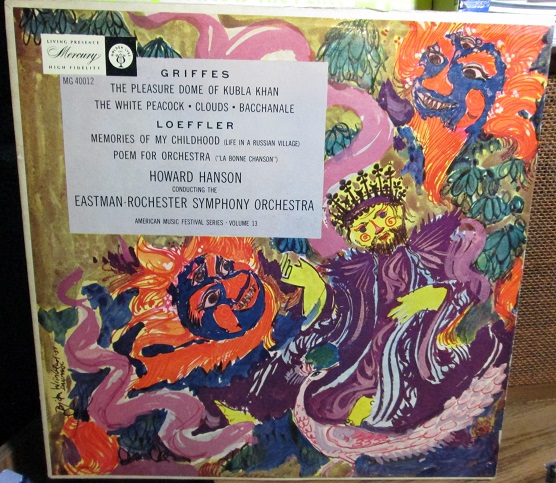
Although the music is what drives my thirst for new records to discover, I have to admit I like album cover art too. Recently I picked up these records because they looked to be in good shape and I really liked the cover art. Have a look:
The albums run the gamut of the eras - from Bach to Brahms to Copland and the above LP with more obscure American composers of the late 1800s / early 1900s. Good music - great album covers!

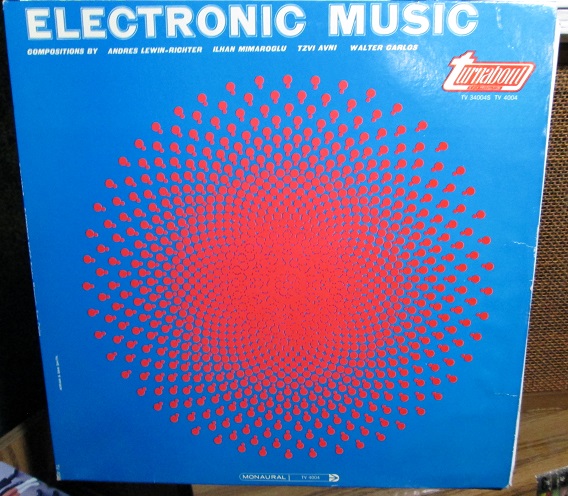
These were all from Princeton Record Exchange. Where I really got excited was in the bin for modern classical. I found a couple of Varese records and this cool LP:
The cover says "mono" but I'm happy the disc is stereo since it's so psychedelic! Early electronic music is fun stuff to listen to! I immediately recognized the album cover from a picture I saw a while ago of John Lennon holding the same record. See here:
Considering Lennon's state of mind in 1967, I'll bet he really liked this record! No doubt it would help inspire his later work on "Revolution 9". I like 20th Century freakout music just as well as Hadyn's saw, saw, saw in its own way. Why put limits on anything? Especially music!

Alright - one last item..........


Last year I did a little deal on the anniversary of the introduction of the 33&1/3 long playing microgroove disc. Since then I've been on the lookout for the first record in that series from June of 1948 - catalog number ML 4001. Well, I got close yesterday when I bagged ML 4003! Looked a little dirty, but the grooves had integrity. Plus the sleeve had a different design to it with the flap at the top and the sides that folded over (unlike later one-piece sleeves of the same look). So this must have been among the first batch of those earliest Columbia LPs from 1948.

So, there you go - it isn't always about the music for me. There's all sorts of cool angles that make record hunting fun. Keep 'em spinning!


Friday, June 14, 2013

Box Set Mania, Schubert Symphonies and late night Debussy

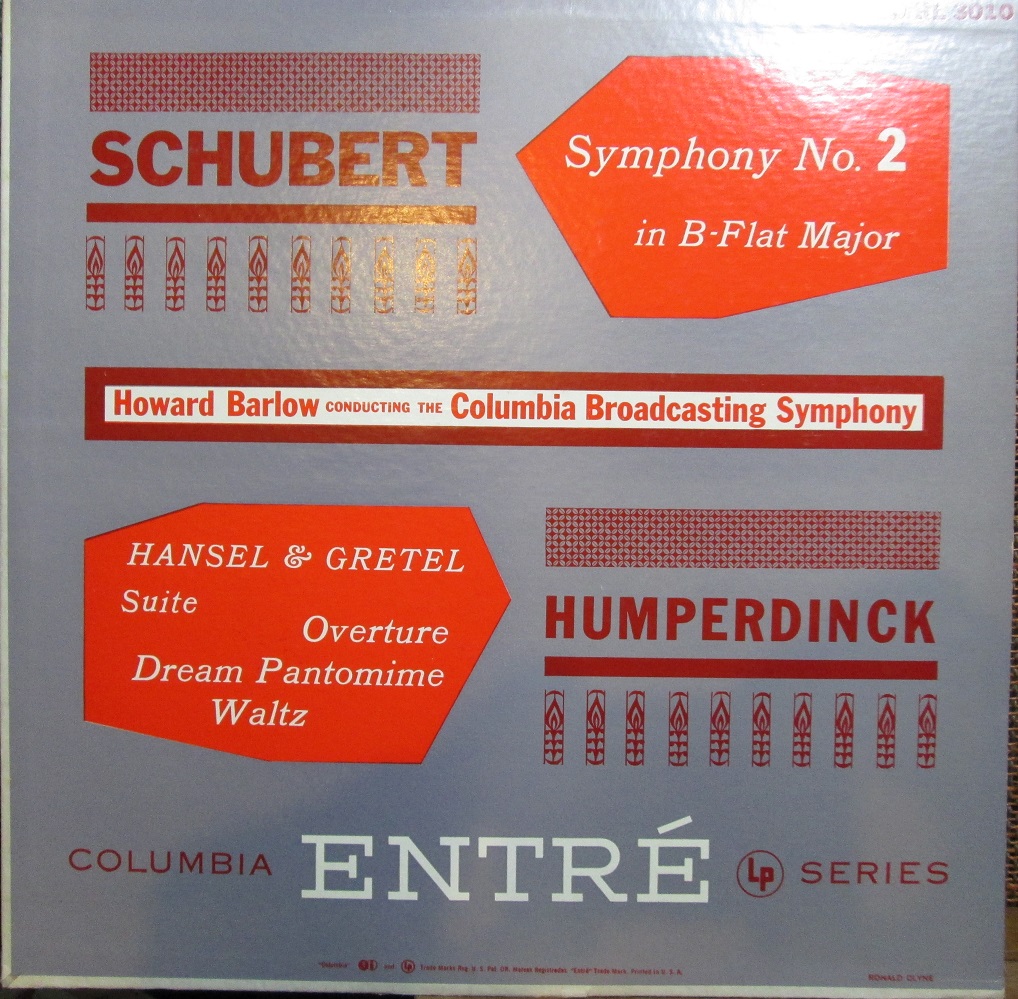
A bunch of entries ago I did a spotlight feature on budget album releases worth checking out. The above LP was among those I pictured then and I'm listening to it again right now, actually. Since m'lady was gifted with a new camera for the holidays I've taken the liberty to borrow it now and then to improve upon the visuals I use here. I have to say, the new Canon camera wipes the floor with the old Nikon "coolpix" I'd been using up til now. Getting nice photos is practically effortless compared to before - niiiice!

Anyway, the above mono LP comes from the Entre budget line Columbia had going and it's a good sounding platter with a pleasant performance of Schubert's 2nd. Here's the label:
It almost looks like a white-label promo or something, but this I reckon is the stock label design. Smooth and punchy mono. Somewhat obscure conductor Howard Barlow does a fine job of leading the Columbia Broadcasting Symphony through this enjoyable performance. The record has a little surface schmutz but the grooves are clean and no real scratches to speak of. Not bad for the $1 I paid for it. Funny to notice the price sticker on the back sleeve:
The little white tag to the left shows this listing at $1.98 new. Let's just figure that the vintage of this record is probably from about 1955 or thereabouts. If we use the CPI Inflation Calculator it's amazing to see what the equivalent in today's money would be for this:

Well now! Interesting to also consider what I paid for a used 4CD box set of all the Schubert Symphonies a few weeks ago - $1.99.
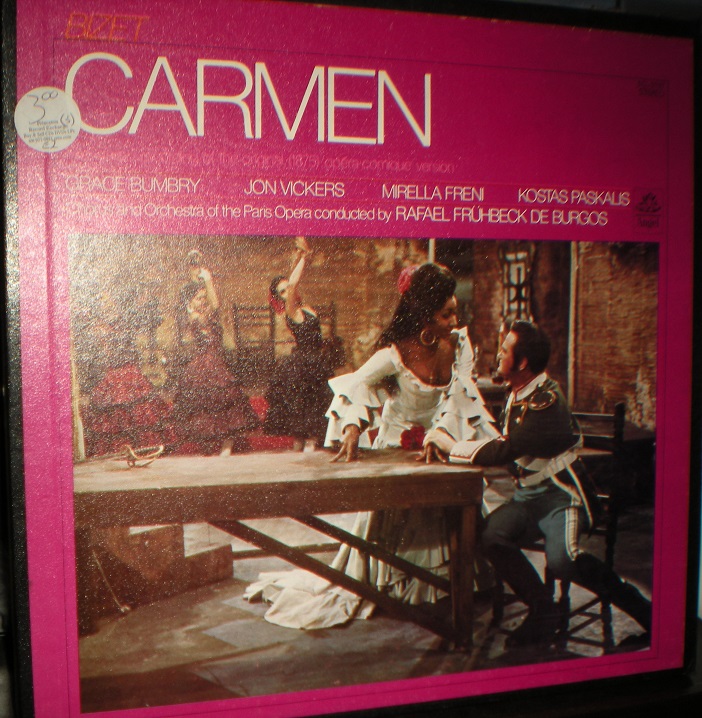
Nice collection - great performances. What would this $1.99 investment have cost me in 1955 money? About 25 cents! The conclusion? Classical fans have never had it so good! Even in this crazy modern "free download" mentality culture we live in. Building a library of quality classical music has never been so cost effective. And these days, 4CD box sets are nothing. I recently took delivery of these two fine box sets:

 The Klemperer box is mostly live recordings yet still pretty enjoyable. Plus it contains an entire Beethoven Symphony cycle along with key Bruckner pieces. The Jochum box likewise has a complete Beethoven cycle as well as complete Brahms and Bruckner symphonies as well. Dang that's a lot of listening! I'm pretty sure the Klemperer set came from Presto Classical online. Even though it was shipped from England, I still got a great deal - about $20 shipped. Speaking of Presto, they're running a Klemperer special for the next few weeks. I'd love to bag a few of these before they go off sale - see here:
GOOD KLMEPERER DEAL FROM PRESTO CLASSICAL

It sure has been an exhausting past ten months for me in my professional career. Stress levels have been at all-time highs. Calming music has become a valuable component for survival lately. One of the most-played slabs-o-wax that never fails to ease me into a better and more relaxed frame of mind before heading off to snoozeville this year has been side two of this album:
Side two features the Debussy piece "Danses" and the Erik Satie classic "Gymnopedies". The Orchestre de la Radio Suisse Italienne led by Roland Douatte may not be the most well-known, tier one orchestra. Yet they sure deliver the goods on this record. I was initially attracted by the unusual (for me) Debussy works featured on this album. But what a performance! Side one is kinda upbeat and bright which is okay for what it is. The real value of this record is ALL ABOUT SIDE TWO, though.

Of course this was a thrift store rescue album. Couldn't find a copy off ebay recently either. The disc was certainly pressed in France and may not have ever seen a domestic (US) release. See here:
Cool label art. I have reason to believe this is a mid-60s pressing mainly because of what popped out of the sleeve - three copies of this postcard:
Here's the address on the back of the postcard:
1967, eh? Fairly modern looking building. Wonder if it's still there. And what the connection between the postcards and the LP is. Not that I care that much. What's really important is this: if you need some extra-mellow musical chillout vibes to calm your shattered nerves, THIS RECORD IS FOR YOU!

Happy hunting / listening / etc............


Friday, May 10, 2013

Beethoven / Stockhausen........Analog / Digital.........It's all MUSIC

Well, it sure has been awhile since my last post here. I've been listening more than writing though I have to admit I still haven't tackled that Wagner Ring Cycle (maybe over the summer?). My insatiable appetite for classical platters has only slightly diminished, at least for common core stuff. How many versions of Beethoven's 9th Symphony are you willing to keep on the record shelf? Sometimes it's just better to leave those platters in the bins for other folks to plunder. Yet, every so often I'll spot a few noteworthy records of interest which can lead to interesting surprises.

Tonight I found myself reaching for the mono LPs again. I've been doing this for the past week or so. Some weeks it's stereo albums - some nights it's all CDs. But lately mono LPs have been in heavy rotation.
Even though I have other versions of this famous Beethoven trio piece, I had to pick this album up since it was in very nice shape (A) and it features Antonio Janigro on cello (B). I have a favorite Janigro record of solo cello Bach suites (the one with the orange cover) so of course any Janigro records are fair game.
And here's that nice red Westminster label. This company put out really excellent quality pressings for their time. Westminster was definitely in competition with the Mercury Living Presence line and boasted the same philosophy to recording (at least for the mono versions anyway) - one single microphone! That's the science behind their "Natural Balance" slogan. And to tell the truth I have yet to hear a bad Westminster record from this era - mainly the 1950s. Of course Westminster would be bought out by ABC Records in the 60s and by the 70s had been issuing those fake-stereo and worse LPs with the questionable album covers. But the original Westminster was a formidable presence on the classical music scene and those platters still sound great.

In fact, I have to say I really like classical recordings in mono. Sometimes classical music recorded in stereo ends up being more about the sound of the hall than the instruments and the music can sound blurry. Not in all cases, mind you. Mono recordings can sometimes sound "pinched" compared to their stereo counterparts revealing their downside as well. It's all on a case by case basis with this stuff. If you really like the music, checking out both mono and stereo mixes (when available) can yield different experiences and you might be surprised at which can sound better!
In the same pile of records with the Beethoven trio album, there were a few 10" records like the one pictured above. It is a sobering reality to consider that the great Bela Bartok himself was living in near-poverty at the time of his death and had made some recordings of himself playing his own music to generate needed cash. I think the above disc was put together after his death with other similar recordings being released on other labels. This disc is pressed on the Bartok Records label. Was this label owned by his family? It would be interesting to know (if so, it would be the precursor to the Zappa Records label indeed!).
I'm certain I have a Remington Records release of Bartok playing piano compositions. Haven't spun that yet, but this little 10" disc is fascinating. Wouldn't we love to be able to hear Beethoven playing his own stuff? Unfortunately he was about 100 years too early for that. I bet it would be shocking stuff though! Not so shocking perhaps, but quite enjoyable piano playing can be heard on Walter Gieseking records like this:
I picked this album up a few years ago during a Princeton Record Exchange heist. This LP featured transfers of 78s Gieseking made in 1939. Interesting to note that after World War II, Gieseking was embroiled in a bit of post-war scandal as he was being accused of having collaborated with the Nazi government. Although he was German by nationality, he had been born in France and became a leading authority on Debussy's piano music. Knowing this bit of history and having really enjoyed the above album I picked up this 10" of Gieseking playing Debussy pieces out of the same pile the Bartok record was in.
As usual when scoping out platters, I gave a quick glance to the disc inside the sleeve and, having determined it was satisfactory enough for the customary $1 investment, I added it to my pile to purchase. This was a few weeks ago. When I got around to taking the record out for a spin I noticed a little piece of paper inside the   record jacket. When I extracted the paper, this is what I saw:

Wow! A flyer for a performance in Hawaii in 1952  - with the artist's autograph! Score!! I love it when stuff like this happens. Now, if that wasn't cool enough - when I looked closer at the disc itself I thought I noticed something unusual on the label:
Hot dang! Another signature! You can see it very well in my photograph here, but to the naked eye on the record itself it is not too clear. I have no idea if these autographs are particularly collectable, but if the antique road show ever comes near me I'm bringing them in! Walter would pass away in 1956 having only gained a renewed popularity on the concert stage in 1953 with a sold out performance at Carnegie Hall. So - this signature and performance flyer predates this comeback phase. Innneressting, eh Watson? Yet another reason why I like classical vinyl.

But vinyl isn't the only way to dig some serious music vibrations. In fact, I'm a bit shocked at what I've found lurking in thrift store CD bins - modern classical! Check out this pile of 20th Century stuff on CD:
John Adams, Philip Glass, Terry Riley, Steve Reich and yes even Stockhausen! I've only played a few of these so far, but what a great way to hear some modern sounds! I was especially knocked out by the Steve Reich disc "Music for 18 Musicians". I played that CD in the car and I just........kept on driving! I think I may have journeyed to distant galaxies when I had that album going!
Equally invigorating was the Terry Riley / John Cale collaboration - "The Church of Anthrax". Although this is a happy hybrid of modern rock and modern classical, it really rocks my socks! What a kooky album cover too, eh?
So - I can heartily recommend these albums to those seeking adventurous, yet sonically pleasing, abstract instrumental vibrations. Keep seeking and listening!


Thursday, March 14, 2013

Nocturnes in stereo / Øivin Fjeldstad / Opera - the Deep End?

A couple of entries ago I was yammering on about how much I enjoyed a mono LP of Monteux conducting Debussy's Nocturnes. Since many mono LPs have stereo counterparts I went looking for the stereo version of this record.
Well, it doesn't seem to exist in stereo - at least on vintage RCA vinyl. I did see an open reel tape of just the Nocturnes piece on ebay, but man that ended up selling for way more than I was willing to pay. Plus I couldn't understand why only Nocturnes was featured on the tape - why not La Mer too? That was on the LP. Well, I managed to find a cheaper alternative and a good answer to my question with this:
An early 80s LP on the budget Quintessence label (another RCA imprint for classical reissues). Good pressing and mastering and way more cost effective at $3. The Nocturnes piece was indeed stereo and fascinating, yet the La Mer side was designated as (the dreaded) "electronically processed stereo" - distorted mono, in other words. La Mer was listed with a recording date of 1954 - was that too early for stereo recordings, perhaps? Or maybe at least - just not this one. Nocturnes has a 1955 recording date. This leads me to believe that the stereo Nocturnes never appeared on vinyl until this 1980s LP. The stereo version hitherto only available on that open reel tape (which was expensive in the 50s as well - the equivalent of spending around $100 or so in today's money - thank you inflation calculator!). I'd say the new LP is the way to go!
As it turns out - while the stereo is interesting I think I prefer the mono mix of this recording since it seems to capture the balance a bit better in my opinion. But when a vintage stereo recording is available - especially of a performance I really like - I'm all over that!

Speaking of "all over that" - I've been on the lookout for more recordings by Norwegian conductor Øivin Fjeldstad. He mainly worked with his native Oslo Philharmonic and produced a number of recordings for RCA's Camden label. The Grand Canyon Suite was the first place I heard his work. There is an LP with a cover like this:
But I ended up finding a reasonably priced open reel tape - for whatever reason the artwork didn't make it to the open-reel box:
No matter - it's a good sounding recording of a very spirited performance. So I've been slowly picking up what recordings of Fjelstad I can find. Here are some others that all exhibit the same qualities of the Grand Canyon Suite.
Here's an LP of Fjelstad's interpretation of Franck's Symphony in D-minor. I took to this symphony when I first heard it years ago - which happened to be a Pierre Monteux version if I remember correctly! Here's what the cover of this LP looks like:
Last weekend I found another Fjelstad LP - this was separated from its box set but since it was mint and I didn't have it - I didn't care if the rest of the box was missing. Plus I'm a big fan of Brahms' 3rd. This record is mono. Does a stereo exist? I'll be looking!
Here's a recording Fjelstad did leading the London Symphony Orchestra. Peer Gynt by Grieg has some well known music and this recording is certainly among the better ones I've heard. Rousing stuff! Sounds nice on open reel!

Mostly I've been focused on instrumental music. Classical vocal music - opera, lieder, etc..... - has been less interesting and/or appealing so far. Once in awhile I'll try to stretch my ears with some vocal stuff, but it's a bit rough going for me. But I have a feeling there's going to be more exposure to vocal music on the horizon. Especially since I've been reading about the significance of opera in the development of music.

A few entries ago I wrote about a great book I'd been reading - "All the Rest is Noise". I'm still reading this book - taking my time since it's so good. But there are a LOT of references to opera pieces in there - detailing their significance and the central nature of this form to many composers: Mahler earned his keep as a opera conductor mainly, Strauss wrote quite a few groundbreaking operas, even Shostakovich's meltdown with Stalin was over an opera he wrote. Hard to ignore this stuff. So over the years I've been picking up deals like this:
Some box sets for cheap. As long as the libretto is included and has an English translation I'm pretty much good to go. That open reel of Strauss's "Daphne" cost me next to nothing. Opera is about as in-demand as folk music these days. Good if you're a fan, of course. But I think the best deal I bumped into lately was this:


An entire Wagner Ring Cycle - conducted by James Levine - on VHS tape for.......TWO DOLLARS. It was priced for $4 and it was half-off sale day, so............could I say no? Well, no. Have I gone off the deep end? I haven't managed to dig into this set yet, but I'm hoping to get into it soon. This is all part of the adventure. If I can't take some risks once in awhile, what fun is that? So much music - so little time!